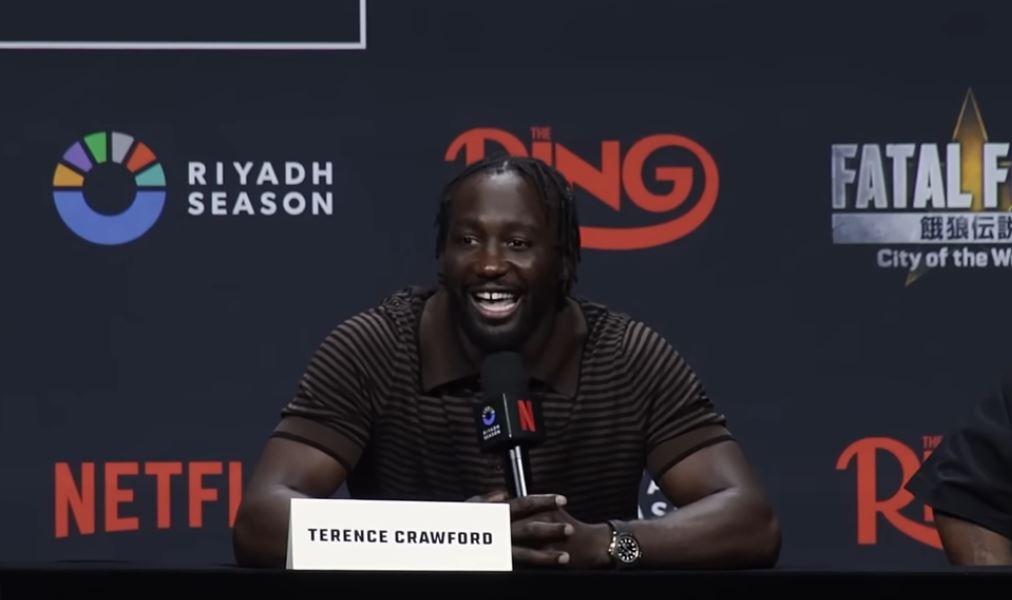
Terence “Bud” Crawford announced his retirement on December 16, 2025, via social media, capping off one of the most impeccable careers in modern pugilism. At 38, the Omaha native walks away with a flawless 42-0 record, including 31 knockouts, after his crowning achievement: a unanimous decision victory over Saul “Canelo” Alvarez in September. “Walking away as a great with nothing else left to prove,” Crawford posted, echoing the sentiments of a fighter who has conquered all. His departure leaves a void in the sport, but his legacy as a technical maestro and pound-for-pound icon will endure.
Crawford’s journey began in the rough streets of Omaha, Nebraska, where he honed his skills in amateur ranks before turning pro in 2008. Early on, he captured the WBO lightweight title in 2014 with a dominant performance against Ricky Burns, showcasing his signature switch-hitting style—seamlessly alternating between orthodox and southpaw stances—that would become his trademark. This adaptability baffled opponents, allowing him to dissect defenses with precision jabs, vicious hooks, and counterpunching prowess.
His ascent accelerated in the junior welterweight division, where he unified all four major belts in 2017 by stopping Julius Indongo in three rounds, becoming the first undisputed champion at 140 pounds since Kostya Tszyu in 2004. Crawford’s dominance continued as he moved up to welterweight, dismantling Jeff Horn for the WBO title in 2018 and defending it against elite foes like Amir Khan, Egidijus Kavaliauskas, and Kell Brook. But it was his 2023 masterpiece against Errol Spence Jr. that solidified his greatness: a ninth-round TKO to become undisputed at 147 pounds, unifying the division for the first time in the four-belt era.
Not content with two undisputed reigns, Crawford ventured into super welterweight and then super middleweight, capturing titles in five divisions overall. His trilogy of undisputed championships—across three weight classes—marks him as a trailblazer, the first male boxer to achieve this in the modern era. The Canelo win, against a pound-for-pound rival with a storied resume, was the exclamation point: Crawford outboxed the Mexican superstar over 12 rounds, proving his superior ring IQ and endurance.
What does Crawford mean to boxing? In an era dominated by hype and pay-per-view spectacles, he embodied pure skill over spectacle. His ability to switch stances mid-fight revolutionized offensive strategies, inspiring a new generation of boxers to prioritize versatility and intelligence. Often overlooked due to promotional disputes and a lack of marquee matchups earlier in his career, Crawford’s perseverance highlighted systemic issues in the sport, like fighter pay and matchmaking politics. He was a quiet assassin, letting his fists do the talking, and his undefeated record stands as a testament to discipline in a brutal game.
Off the ring, Crawford’s philanthropy in Omaha—building community centers and mentoring youth—added depth to his persona, making him a role model beyond the ropes. Fans on X (formerly Twitter) echoed this sentiment, with one post calling him “one of the coldest résumés the sport has ever seen.”
As boxing moves forward without Bud, questions arise: Who fills the void at the top? Prospects like Jaron “Boots” Ennis or Tim Tszyu may rise, but replicating Crawford’s blend of artistry and power seems improbable. He’s a two-time ESPY winner, BWAA Fighter of the Year, and now, a Hall of Fame lock. Terence Crawford didn’t just win fights; he redefined excellence. The sport is poorer without him, but eternally grateful for his era.
