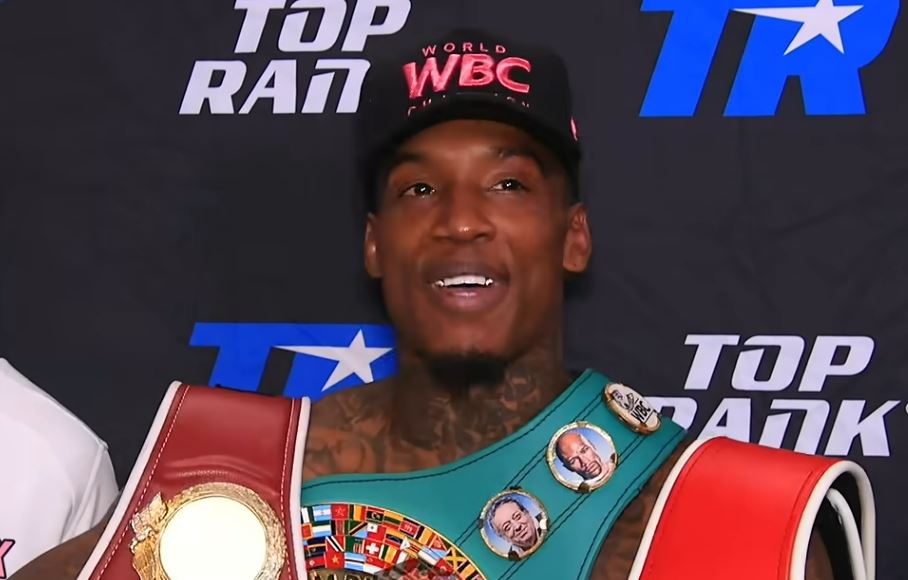
I remember watching O’Shaquie Foster for the first time against Miguel Roman, and later against fighters like Rey Vargas and Eduardo Hernandez. Each time, I found myself thinking, “He’s pretty good, but…” Those are dangerous words in boxing. More often than not, they signal that a fighter is destined to plateau at the contender level or enjoy a brief title reign before becoming just another opponent for better champions to pad their records against—or a stepping stone for a rising talent in a showcase fight.
The Texas native’s next performance against Abraham Nova did little to change my opinion. Sure, Foster won, but he did so in a fashion that reinforced what I perceived as his shortcomings: a low work rate, complacency on the ropes, inactivity on the inside, a tendency to get caught staring at his food, and an apparent reluctance to make timely adjustments. He looked strong, talented, well-trained, and analytical, but he seemed to lack a fifth and sixth gear.
Worse still, I didn’t see any fire in his eyes. To be clear, I never questioned his heart. What I failed to see was the passion and competitive spirit that define the legends of the sport. My verdict on Foster became something along the lines of, “Yeah, he’s good, but he’s not going to be able to handle the elite.”
So, when he came up short against Top Rank’s darling, Robson Conceicao—largely due to the very issues I’ve mentioned—I was anything but shocked. With two previous losses already on his record and an American boxing public that can react to a single defeat the way a medieval European town might react to a leper, I figured Foster’s career would soon go the way of the dinosaur.
I hope you’ll forgive the cop-out, but words honestly don’t feel sufficient to express how glad I am to have been proven wrong.
Since losing to Conceicao, Foster has reclaimed his title by avenging that defeat to the Brazilian amateur standout and has earned the three biggest wins of his career in clear, emphatic fashion. He proved that the well-schooled Philadelphia technician Stephen Fulton had no business at super featherweight. He showed us what it means to say there are levels to this game when he faced the young, hungry Raymond Ford. And just this past weekend, he demonstrated exactly how to box—and when to sprinkle in a little brawling—against the enigmatic whirlwind from Mexico State, Emanuel Navarrete.
In each fight, Foster went to work, let his hands go, and displayed the competitive spirit I had previously found lacking. All traces of complacency were gone. Against Fulton, he showed passion and an implacable will. Against Ford, he proved he could shift into higher gears when necessary. And against Navarrete, everything finally came together, allowing Foster to paint his masterpiece.
He was strategic, strong, precise, patient, and consistently active. He managed distance almost perfectly from the outside, won exchanges at midrange, and dominated on the inside by delivering the right punches at the right time. He also used just enough wrestling to maintain dominant positions—a skill surprisingly absent from many modern boxers, even pressure fighters.
That is no small feat against an experienced three-division world champion who has mastered the art of Mexican barroom brawling to the point that he routinely tears through top-level opposition with moves that look as though they were plucked straight out of Tekken or Street Fighter. Navarrete is strong, unorthodox, durable, menacing, and unpredictable. Yet Foster weathered the storm without getting so much as a drop on him, making adjustments round by round as he systematically dismantled one of the sport’s most difficult puzzles.
And then, to top it all off, Foster did what so many modern boxers seem reluctant to do: he closed the show.
Rather than dancing his way to a decision on his tiptoes, the Texas native dug deep, bit down, and dropped Navarrete twice in the twelfth round. He didn’t simply demonstrate that he could outbox an elite opponent. He showed that he could finish one, too.
Better still, Foster continues to demonstrate class outside the ring. He has spoken highly of his opponents, returned Navarrete’s belts, issued realistic and respectful challenges to other top fighters in his division, and even accepted compliments from public rivals like Shakur Stevenson with grace rather than pettiness.
O’Shaquie Foster refused to plateau or fade away when things didn’t go his way. He doesn’t routinely misrepresent his intentions, duck opponents, or price himself out of fights. Instead, he has improved across the board while conducting himself outside the ring like a true professional.
I won’t name names. Not today, anyway. But every American fighter of this generation could learn something from O’Shaquie Foster and his recent string of victories.
As for Foster himself, if I ever had the opportunity to speak to him, I’d have just one thing to say before anything else:
Hats off to you, Champ. I see you now.
