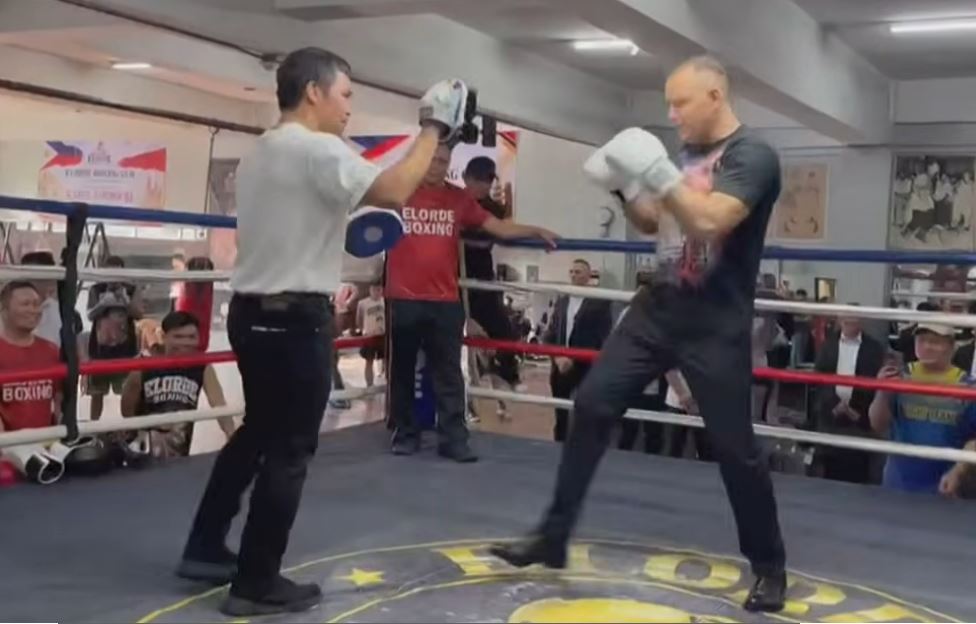
Polish President Karol Nawrocki recently stepped into a Manila gym during his historic state visit to the Philippines—the first by a sitting Polish head of state—and trained on the pads with boxing legend Manny Pacquiao. Pacquiao, the only fighter ever to win world titles in eight weight classes and now head of the Philippines’ National Anti-Poverty Commission, posted video of the session and called it “an honor” to train the Polish president. Nawrocki, a former amateur boxer himself, exchanged gifts afterward, including a personal pair of cufflinks he was wearing. It was light, good-natured, and perfectly in character for a leader who has never hidden his affection for the sport.
In Poland, a predictable portion of the political and online class treated this as a national humiliation. Opposition voices from Civic Coalition and the Left piled on with theatrical outrage: “shame,” “dziadostwo,” “Poland is dying of embarrassment,” suggestions that the president somehow wants to “punch someone,” and sneering remarks about attire or the very idea of a head of state throwing punches on pads. The tone was not measured disagreement over priorities. It was contempt dressed up as high-minded concern for dignity.
That reaction says far more about the critics than it does about Nawrocki or the meeting itself. The opposition’s outrage over something so innocent only made them look bad.
First, the episode was not some dereliction of duty. It occurred during an official visit focused on strengthening political, economic, and defense ties—Poland’s first presidential-level engagement with the Philippines in decades. Soft power, cultural affinity, and personal rapport are not frivolous add-ons to diplomacy; they are part of how countries build relationships. Pacquiao is a genuine national icon in the Philippines, a former senator, and currently engaged in anti-poverty work. Meeting him, sharing a common interest, and treating the moment with warmth is not undignified. It is human. Leaders across the democratic world have done far more theatrical sports photo ops without triggering national existential crises at home.
Second, Nawrocki’s background makes the session coherent rather than performative. He has spoken openly about his amateur boxing past. This was not a sudden, awkward attempt to look tough for the cameras. It was the President of Poland indulging a longstanding personal passion while on foreign soil, in the company of one of the greatest practitioners of that sport. The video shows smiles, instruction, and mutual respect not some grim power display.
The critics’ framing that this somehow demeans the office reveals a strangely brittle and elitist view of leadership. Presidents are human and allowed interests. They are allowed moments of lightness. They are allowed to look like people rather than marble statues. Mocking a training session with Pacquiao as “shameful” while treating every other form of political theater as normal is selective and unconvincing. If the same politicians had arranged a carefully staged appearance at a high-culture event or a carefully worded seminar, few would call it undignified. The real objection appears to be less about the activity and more about who is doing it.
By rushing to insult the meeting, the detractors make themselves look small. They elevate a friendly, reciprocal moment between a visiting head of state and a sports-and-public-service figure into a proxy battle for domestic grievances. In doing so, they signal that any positive or humanizing image of the president must be attacked on principle. That approach does not project seriousness or alternative vision. It projects insecurity and an inability to distinguish between actual policy failures and a man hitting focus mitts for a few minutes.
Diplomacy is not only treaties and joint statements. It also includes the unscripted moments that make countries feel less distant from one another. Pacquiao treated the Polish president with respect and goodwill. Nawrocki responded in kind. The people who responded with sneering contempt are the ones who diminished themselves. A confident political culture can absorb a boxing photo op without declaring national collapse. The overreaction suggests the critics’ problem is not the meeting, it is that the president looked comfortable and approachable while conducting it.
In the end, this was far more than a simple photo opportunity—it was a masterful display of soft power by President Nawrocki, one that simultaneously burnished his personal image and strengthened the growing bonds of friendship and cooperation between Poland and the Philippines.
Muki is a long time boxing fan and enjoys Mixed Martial Arts. He has been writing boxing articles since he was a teen and his favorite fighters of the past are Muhammad Ali, Mike Tyson, Prince Naseem Hamed. Favorite MMA fighters are Khabib Nurmagomedov, Georges St-Pierre, Anderson Silva and Fedor Emelianenko.