
A fighter’s ego is a strange beast. On the one hand, it’s a necessary component in driving them forward and fueling their confidence. This near-blind belief in their abilities is a requirement for greatness and a hell of a thing to have when staring down a professional warrior with their own set of dreams and priorities, which include separating you from your consciousness. On the other hand, too much ego is often exactly what gets you separated from said consciousness.
Consecutive weekends of boxing have brought us a considerable amount of ego—enough to make me nervous before the opening bell of two separate main events. The first was Elif Nur Turhan versus Alycia Baumgardner. The second was Diego Pacheco against Darius Fulghum. In both cases, we had a clear favorite going into the fight: Alycia and Diego. Both seemed to have their heads in the clouds during pre-fight interviews.
Alycia has been, let’s say, overly concerned with crowning herself the “face of women’s boxing” and rather vocal about how she, and she alone, dictates who, when, and where she fights. As an accomplished veteran, perhaps she has earned the right to the latter. Yet she has also appeared a bit tone-deaf toward the fans of late. They have wanted to see her in a big fight for some time, and Caroline Dubois seems to be her biggest option.
Moreover, no one crowns themselves the face of boxing—no man, no woman, or third option. To be clear, Alycia has the look, the style, the talent, and comes from the right part of the world to become the flag bearer of women’s boxing. Still, screaming from the rooftops that you are the face of the sport won’t make it so.
When you are the face of boxing, it is because you are objectively the highest-selling, most sought-after, and most influential fighter in the game. The numbers will scream this for you. Ask Muhammad Ali, Sugar Ray Leonard, Mike Tyson, Oscar De La Hoya, Canelo Álvarez, Amanda Serrano, and Katie Taylor. Not one of them had to tell you who or what they were. Everyone just knew. It has been that way since the days of Jack Dempsey.
With that out of the way, Alycia still showed her class by acknowledging in several interviews that Elif Nur Turhan was a legitimate fighter with dangerous power. That recognition, along with her championship experience, may have been why she was able to adapt after a concerning opening stanza.
Baumgardner looked uneasy after getting caught with two powerful left hooks in the first round and was forced into the trenches in round two. Yet she flipped a switch from there and won each of the following rounds in exciting fashion. She looked brilliant against a game opponent.
The same cannot be said for prospect-turned-contender Diego Pacheco. In pre-fight interviews—plural—Diego practically boasted about never having seen or studied Darius Fulghum in preparation for their bout. Instead, he continuously referred to himself in the third person—not a good sign.
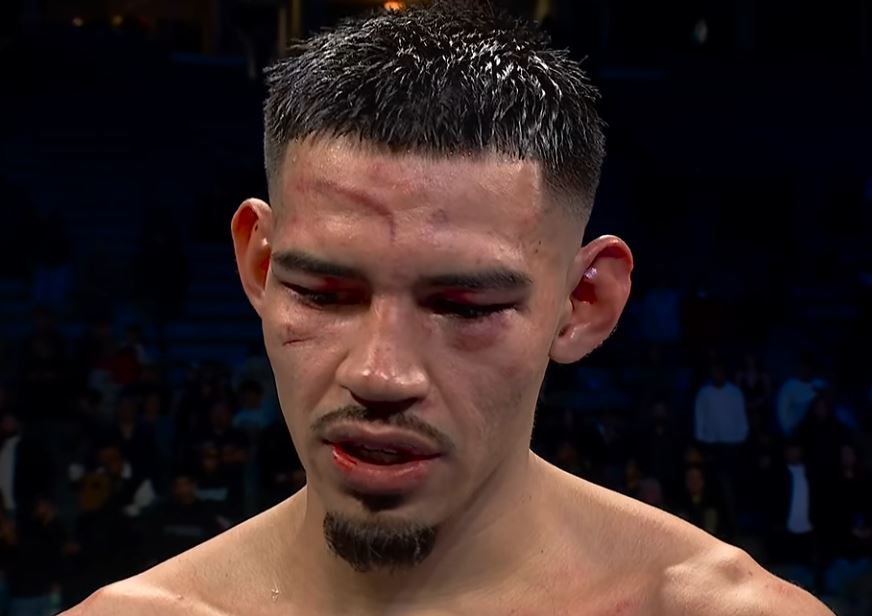
To make matters even worse, Pacheco’s newest trainer, Buddy McGirt, doubled down by admitting that he had never bothered to study Fulghum either. There is no need to detail the folly of this error—the fight does that for us. Pacheco already had a look on his face that said, “What do I do now?” a minute into the first round, as Fulghum used superior footwork, feints, and poise to close the distance and get in range. Pacheco’s body language never improved as his opponent began landing shots and applying pressure on the inside, an area Diego seemed completely unprepared to deal with.
This surprised me greatly as it unfolded. Realistically, Fulghum was not considered a top contender by most following his recent loss to Uzbekistan’s Bektemir Melikuziev. His name was not the sort that would launch Pacheco into the Canelo sweepstakes, and Pacheco would need a dominant performance to get fans excited about a potential showdown with Munguía or Lester Martínez.
I assumed Pacheco’s management saw this as a necessary development fight. I figured the calculus was something like this: “Pacheco had trouble on the inside against a pressure fighter named Kévin Lele Sadjo, so let’s get him working on managing distance and in-fighting in the gym, then give him another test in the ring before he vies for a title.”
I seem to have been way off. It appears the thirst for an easy paycheck was what had Pacheco’s team satisfied with the matchup. Unfortunately for the young Chicano fighter, he paid the price for his hubris as if he were in some old Greek tragedy.
Pacheco won, perhaps, three rounds out of twelve, despite whatever the judges said, and never looked good doing it. In his defense, he did land some slick shots that would have rocked lesser opponents, but Darius Fulghum was simply on another level. He arrived focused, appropriately confident, well-prepared, and with a game plan. As a result, he left with the biggest win of his career, a name for himself, and a chance at further fortune and glory, which I look forward to seeing. Just do us all a favor, Darius, and keep at least one hand up next time.
As for Pacheco, his career is anything but over. One loss certainly sets you back a bit, but it isn’t stage-five cancer. Fulghum’s own career trajectory proves as much. There is no doubt that if Pacheco resets his ego, improves his preparation, and stays focused, he can still have a good career. Who knows? With the necessary fire now lit under his hindquarters, he may even have a great career—if he can get his ego in check and find the right balance of belief, desire, and respect for his opponents.
